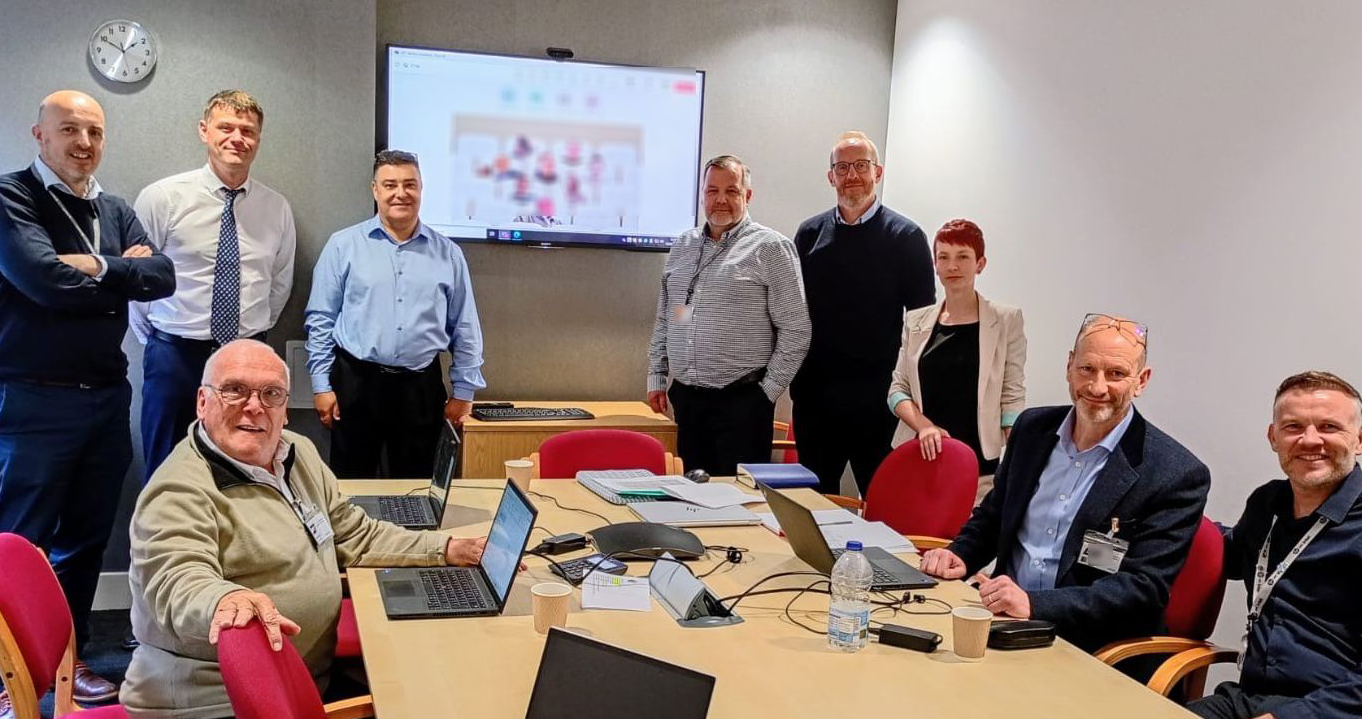



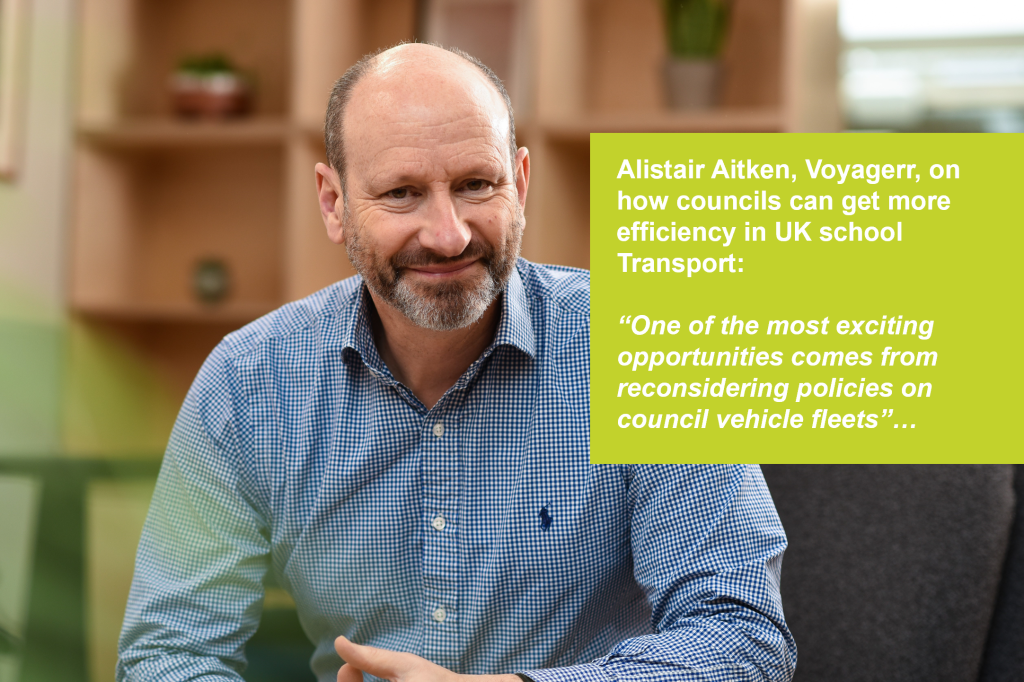
Interview with Alistair Aitken — Specialist in Digital Platforms for School Transport, SEND, Adult Social Care Transport and DRT at Voyagerr with more than 25+ years of experience in the mobility field.
The pressures facing UK school transport today are undeniable: rising SEND demand, shrinking budgets, fragile legacy systems, and overstretched teams.
This challenging landscape is forcing many councils to rethink school transport services and long-established ways of working.
But this stress point is also a moment of opportunity.
A Sector Under Pressure – and on the Brink of Transformation
Alistair Aitken, how would you describe the current situation for UK school transport?
“UK school transport is, in many ways, under even more intense scrutiny today for a variety of reasons.
School transport delivered by UK councils is under unprecedented strain due to a perfect cocktail of challenges – rising SEND applications, increased vehicle, driver and now fuel costs, all pushing down choice of service providers as it becomes less sustainable for them. And increasing volumes of SEND trip requirements are significant. They are far more complex to manage than mainstream ones due to the stringent rules associated with them – they are more administratively and operationally demanding; and their more singular nature feeds through to a much higher cost per trip. The potential Reform Bill coming in 2027 that will affect SEND may also yet have a hand to play in the near future.
Teams that were running at capacity before these myriad factors developed since the pandemic have been coping with a mixture of manual processes and older technologies.
In many cases this situation now barely allows teams to provide the required quality and safety levels and is now exposing councils to operational risk — ranging from less critical incomplete or inaccurate data to the very real possibility of a child not being picked up through processes designed for a different scale or critical information not finding its way to the right person at the right time.
And legacy systems just do not provide the teams with the speed of access to up-to-date information that is now required of them. In the worst cases, legacy databases that hold sensitive data aren’t supported any more, and that can cause a ‘burning platform’. It only takes one crash to create a real issue and a real headache for teams that are already incredibly stretched.
As these pressures mount, now is the moment for many councils to ask bigger questions — not just about how they operate today, but about what they need for tomorrow’s anticipated landscape and ask their technology providers how they can exploit the rapid advances in communication, processing speed, and artificial intelligence…”
Looking Ahead: A Future Built on Shared Assets and Smarter Operations
Where do you see the biggest opportunities for councils moving forward?
“As I said previously, some local authority team’s predicaments are self evident – systems that may collapse and not be recoverable are the obvious low hanging fruit – but as a solution provider, it is our responsibility to ensure that when the pressure becomes too great, we don’t just propose a more up to date replacement of their current technological estate, but invite clients to think bigger and more progressively about how these requirements could be delivered but in creative ways, and always supported by a robust solution strategy.”
Are there any obvious opportunities?
“Yes .. one of the most exciting opportunities comes from something councils often already own or have exclusive access to: their fleets.
It still feels that local authorities are not able yet to take more strategic approaches to using these assets across the various transport teams – that can unlock either extra capacity or further efficiencies.
This can be for several reasons – historical, budgetary siloes, and cultural inertia that prevents this more fluid approach.
But the solutions are now ready and able to support and exploit these opportunities for those that can find a way.
Several authorities already share (for example) resources and assets to provide adult social care transport (sometimes known as ‘Paratransit’) alongside Special Needs pupils, and even non emegency patient transport.
The solution requirements are very similar in terms of business rules, paremeters and violation protection that are so core to these services.
If we see a minibus parked and unused in a local authority depot at any time of the day – we know that is an asset that could and should be exploited, regardless of historical practice – and we should let technology do the heavy lifting.
It’s great to have those conversations with transport authorities that are pushing the boundaries with progressive shared mobility strategies – I love delivering those messages back to the Voyagerr product teams!”
Breaking Down Silos Across Transport Services
Historically, services like school transport, social care transport and DRT have been separate — different budgets, teams, systems and even cultures. Could this change?
“That can change. The right technology can support all these services in one platform. The potential benefits would be enormous.
This is not just an operational shift—it’s a strategic one. Councils can begin to design mobility services holistically, not in isolated fragments.”
The Digital Backbone of the Future
What kind of digital capabilities do councils need to enable this future?
“For this future to work, councils need digital platforms that can understand complex SEND requirements, support strict safeguarding rules, and handle bookings, cancellations, and eligibility digitally.
Systems must also be able to optimise fleet allocation across multiple service types, update drivers in real time, and provide parents with continuous visibility while reducing the administrative burden on teams.
The platform offering this can even become an enabler of new thinking…
When people are no longer firefighting, they can optimise processes and develop new services.
Digital systems make it possible to plan flexible forms of mobility — especially in rural areas where transport gaps persist.
Demand responsive services, hybrid models, and shared fleet networks all become viable in ways they weren’t before.”
Reshaping UK School Transport for the Better
When you look ahead, what do you think will define the coming years in school transport?
“The coming years will be defined by how councils respond to the burning platforms facing them today.
Rising SEND numbers, fragile systems and tightening budgets present undeniable challenges.
But they also create momentum for reshaping UK school transport for the better.
For the first time, technology allows us to think differently about how people move around their communities.
We can use assets more effectively, break down the silos and design services that benefit everyone.
It is a future built not on fear of change — but on the promise of what change can unlock”.
:::::::::::::::::::::::::::::::::::
Voyagerr’s digital platform for planning, managing, and integrating school transport services.